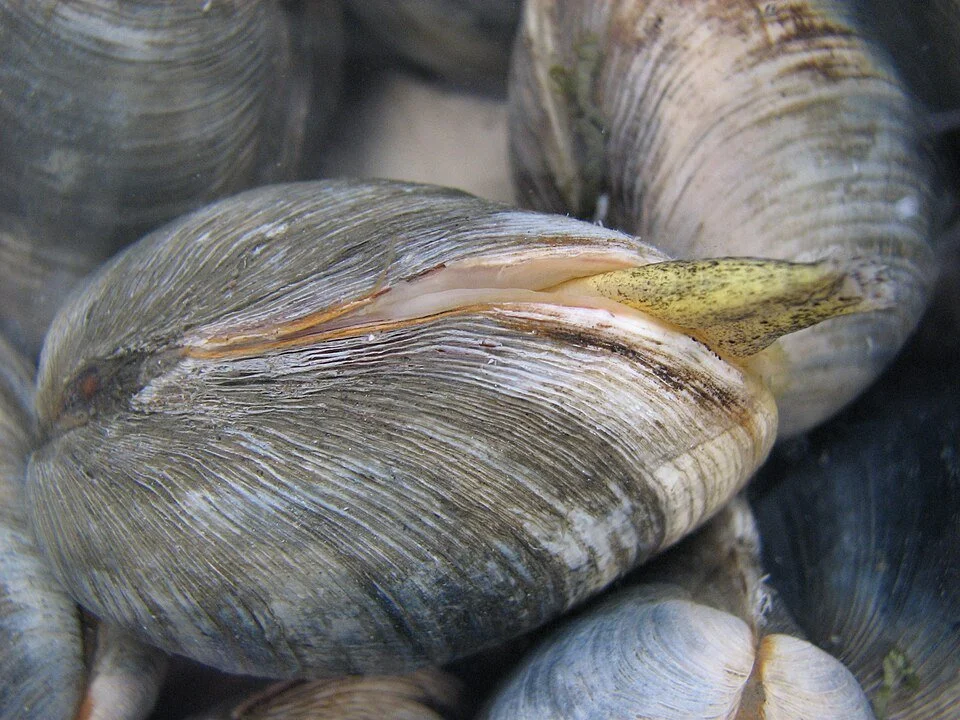
Photo by Almandine
Quahog
All along the Eastern seaboard, from Florida to Canada, you may encounter the hard clam. And if you live in New England, you may not recognize the name – we call it the quahog, as the Algonquians living here have done since time immemorial. These clams provide a source of food, ordered off menus as littlenecks and topnecks and clam chowder. But they were also used by the Native people of this place as an important cultural item, with the shells turned into wampum beads and crafted into belts to record treaties, perform ceremonies, and secure allegiances.
When the Europeans arrived, wampum shifted to work as currency and was even briefly legal tender in some states. Now, quahogs are a common clam in aquaculture, raised extensively in New England. There are even stable populations across the Atlantic Ocean!
What do you love about this particular creature?
What do they reveal to you about God and our faith?
While we often think of landscapes as stable and unchanging, the species mix of an ecosystem changes over time, and the woods that our grandfathers walked are not the woods we see today. But some species, like the quahog, have been with us for hundreds of years. Our relationship with them has changed in many ways, but they remain a food our New England ancestors ate.
While most people living in New England do not know the historical importance of the quahog, they are still woven into our economy and referred to by their Native American name. Think about what connections we have with the land we live on, and how we can maintain those connections for the generations who will come after us.
Author - Elizabeth Zipf
Elizabeth Zipf is a veterinarian living and working in central Massachusetts.
Almighty God, you have given us a world of natural riches. Help us live in harmony with all your creation, honoring it through ceremony rather than commercialism, through Jesus Christ our Lord. Amen.