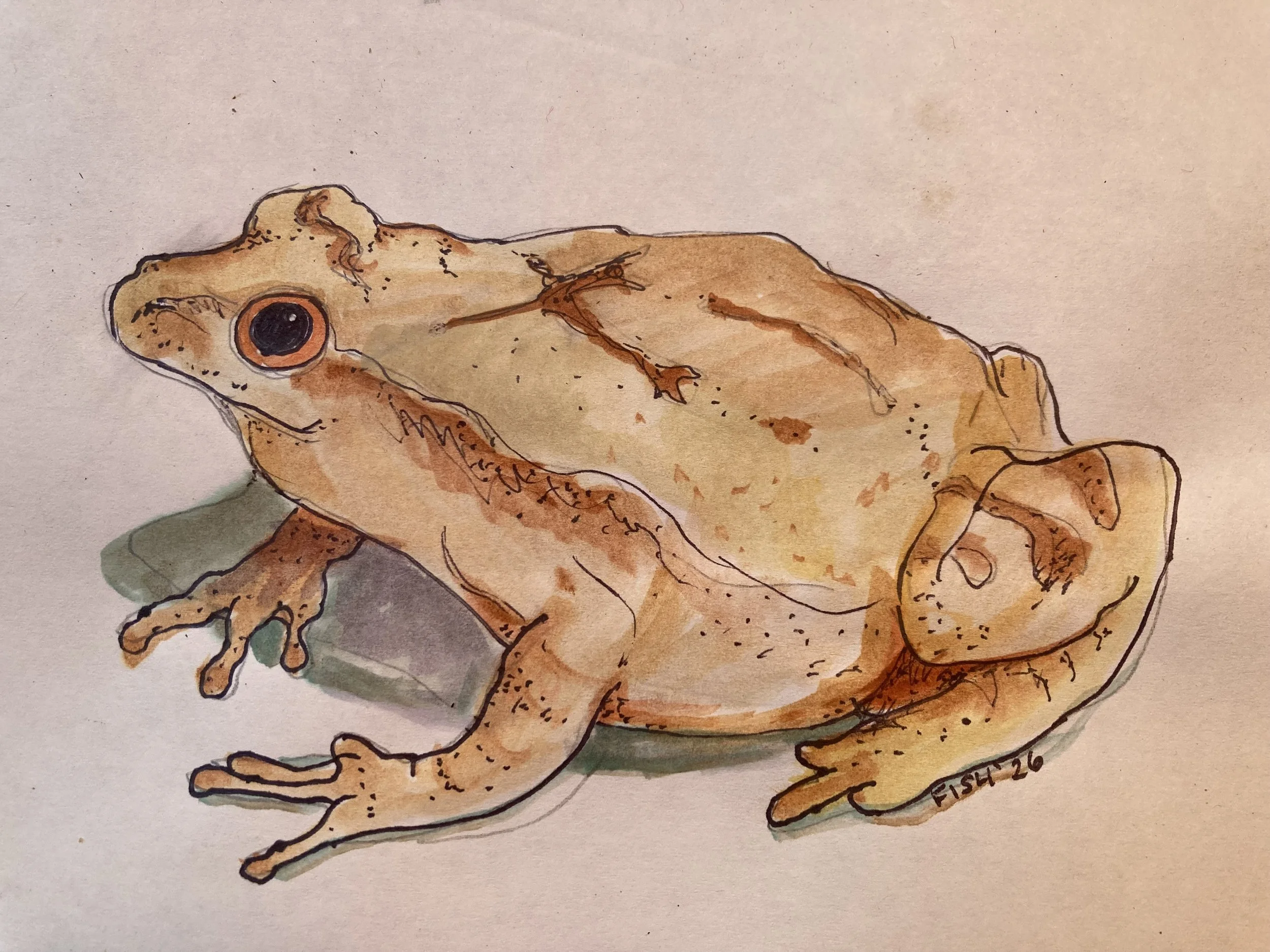
Sketch by Nancy Fishell
Spring Peepers
I was happy and surprised that no one had chosen spring peepers. Last year I wrote about bats, admittedly not everyone’s favorite. But who doesn’t like spring peepers? They are cute little frogs about an inch long that announce the end of winter. Only males peep, and females are attracted by the peeping. They lay their eggs in vernal pools and ponds. Rumor has it that the loudest peeper attracts the most prospective mates. I also read that other males are attracted to the loudest peeper, and some manage to snag a mate before they get to him. Spring Peepers live three to five years mostly on the ground. They can change their body chemistry, creating glucose to prevent freezing, a handy talent to have! Their Latin name is Pseudacris crucifer; the genus is chorus frog (loosely translated false insect), crucifer for the cross-like patterns on their backs. They are often mistaken for tree frogs, which they are not. One of their greatest talents is causing humans to send messages and videos to each other joyfully announcing that the peepers have arrived.
What do you love about this particular creature?
What do they reveal to you about God and our faith?
Sitting outside on spring evenings hearing these little frogs singing is a joy. I love that they are called chorus frogs. Being a singer myself, they do seem to be singing together. Sometimes they stop all at once. Perhaps it’s because of danger, but I prefer to think one of them is directing. After a short rest, there is one peep, then two, and suddenly they’re all peeping again. How do they know?
Listening to the singing of frogs, the birds, the trees who communicate underground (yes okay, I do talk to trees), really getting in touch with nature puts me in touch with myself and this crazy, amazing creation I am a part of. It is truly beyond my comprehension, as is the love that permeates it all.
Author - Nancy Fishell
Nancy Fishell, artist, retired fine arts teacher and amateur know-it-all. She lives in Becket, Massachusetts.
Grant us the ability to love and appreciate the mystery of creation in all its iterations.