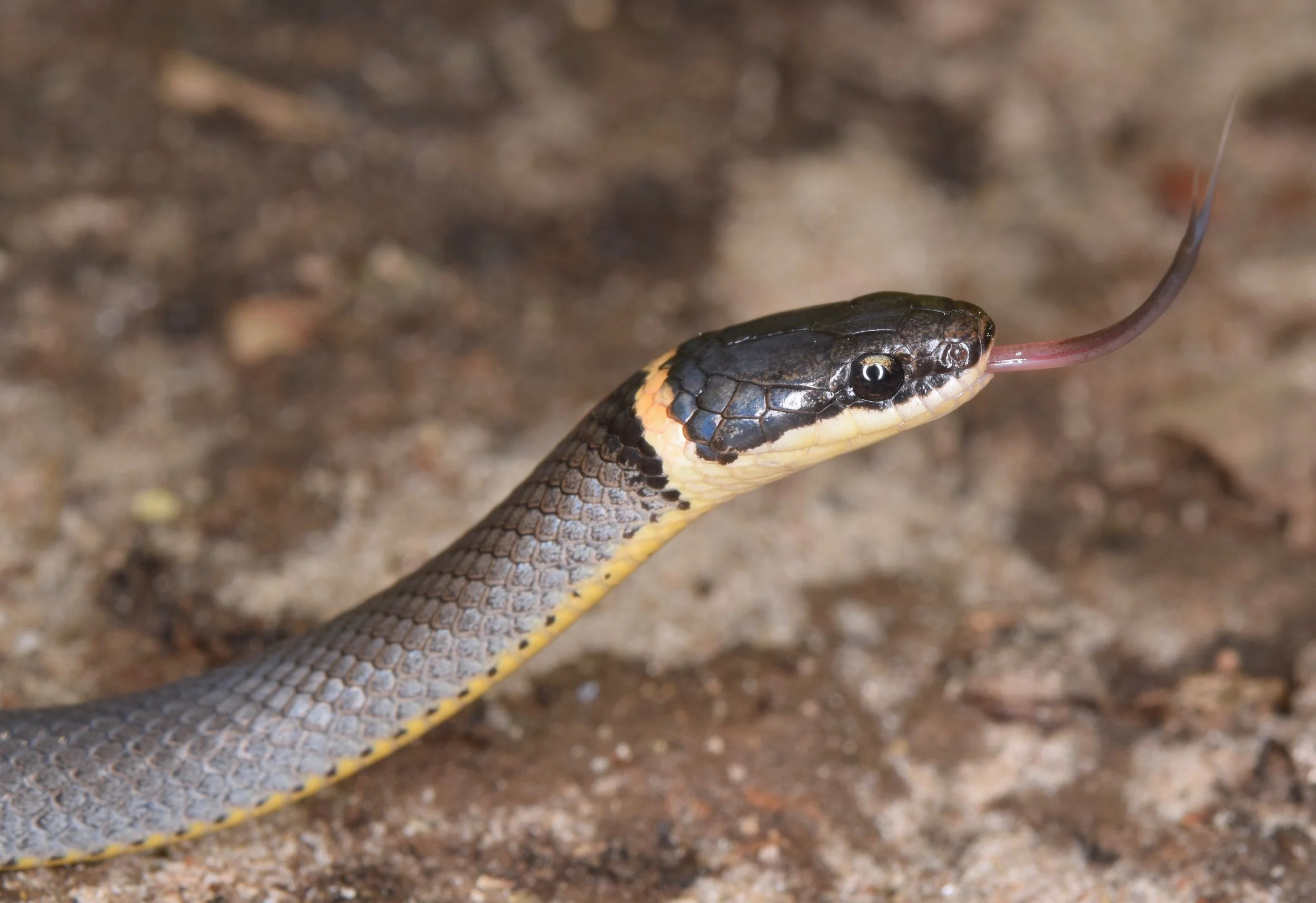
Image by Christina Butler
Northern Ringnecked Snake
The Northern Ringnecked snake is a small, dark blue-black that is sometimes opalescent. It lives across the New England states, preferring dark, moist, wooded areas and old quarries. In mid-summer, it lays 3-5 eggs and hibernates during our cold winters, sometimes alongside mammals in their burrows or under rocks. The Northern ringneck snake contributes to its ecosystem by eating small insects and pests that could threaten plant life while providing mid-sized meals for larger predators.
What do you love about this particular creature?
What do they reveal to you about God and our faith?
Northern Ringnecks reflect God’s work in Creation through expression of choice in living alone or in community. Although capable of surviving and thriving independently, Northern Ringnecks often choose to live in community, perhaps sensing greater safety or improved quality of life together. This seems to be a choice: some will opt for a solitary life while others will choose communal nests for their eggs and cohabitation during hibernation.
God invites Northern Ringnecks into choice in how they pattern their lives, responding to the environment and their own sense of what feels most fully like themselves in the context of Creation. Our ecosystems are varied just as the species that comprise them, full of possibilities and individuals within the whole.
Author - The Rev. Emily Keniston
Emily Keniston is a transitional deacon and serve as the Faith Formation Director in the Diocese of Maine, in the unceded territory of the Wabanaki people. When not in church, she can most often be found running Maine’s beautiful trails, swimming in the ocean, lakes and rivers, or hiking some of the many 4,000 ft mountains across New England.
Creator, Redeemer and Sustainer God, you are the one who provides care for us even in quiet, hidden ways. You are the one who calls us into discernment about who we really, truly are, using our diversity to knit together the entirety of Creation. Be with us still, and make known to us the best environments for our care and keeping that we may, in health and wholeness, turn our praise and thanksgiving toward you.